

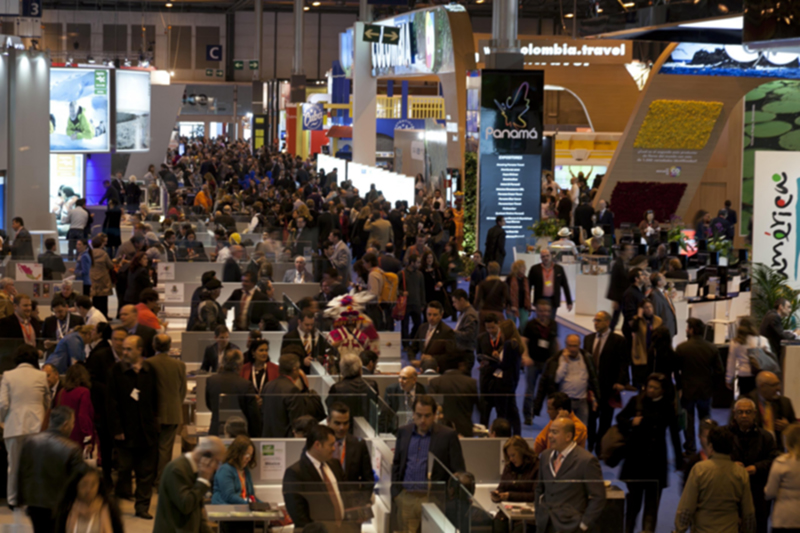
Have you ever wondered how to make the most of your company’s participation in a trade fair? How to attract potential clients to your stand? How to promote yourself in an effective and original way or, more generally, what the best way is to achieve specific objectives that benefit your business at a given event? The set of strategies and actions aimed at answering these and other related questions is known as trade fair marketing, or, using the universal English term, exhibition marketing. Essentially, it is the activity that brings together the principles and practices designed to enhance commercial capacity, understood as increasing demand for a specific product or product range through certain supply tactics, which in this case are developed at exhibitions, trade fairs and similar events.
In order to develop an attractive and effective trade fair marketing strategy, proper planning is essential from the outset. Naturally, the earlier this process begins, the better the results will be. At this stage, once the business objectives and the available human and material resources are known, the aim is to leave nothing to chance. To achieve this, it is necessary to: carry out a personalised study that takes into account formal aspects such as the characteristics of the physical space where the event will take place; address issues more closely related to content, for example the theme of the meeting and the way in which the organisers plan to conduct it; identify, resolve and anticipate administrative matters that must be dealt with; and, of course, focus on the specific features of stand design or the spaces where the company’s activity will take place. This last aspect is particularly relevant, as it is what stands out most from the outside, although, as noted, other aspects of planning —less visible to those outside the sector— should not be underestimated, as they are no less important. The key here is to be creative without appearing extravagant or eccentric; to attract attention in such a way that it is the public who approaches us, rather than the other way around.
Once all this preparatory work has been completed, the next stage is execution, in which what has been planned is implemented and, above all, implemented in the planned way. A professional and experienced team will be the key to success, ensuring that everything unfolds as expected and that your objectives are achieved with apparent ease. Once the event has ended, it is time to dismantle and withdraw in an equally orderly and intelligent manner, which will be straightforward if this has been considered during the planning phase. Afterwards, it is extremely important to analyse whether everything has developed as expected and, if not, to study the causes and consequences so that it does not happen again. In addition, it is advisable to have a report detailing how our work has been carried out.
For Cota Creativa, these are, broadly speaking, the essential characteristics of a good commercial strategy, which constitute an indispensable tool and thanks to which it is today an undisputed reference in trade fair marketing.